
Business Compliance Software and Solutions: What Businesses Need to Know About Compliance Management

Compliance management is a core responsibility for businesses — especially small and medium enterprises (SMEs). It covers the legal and regulatory steps organisations must take to protect data, meet industry standards and avoid costly penalties. This article breaks down the essentials of compliance management, explains how IT solutions help, and sets out practical best practices. With the right approach, businesses can reduce compliance risk and strengthen operational resilience.
What Are the Essential Compliance Requirements for SMEs?
SMEs face a mix of regulations and standards that shape how they operate. Meeting these requirements keeps businesses on the right side of the law and helps sustain customer trust. Knowing what rules apply — and where the gaps are — is the first step to avoiding fines, reputational damage and operational disruption.
Which cybersecurity compliance standards must SMEs follow?

To protect sensitive information and maintain continuity, SMEs should follow established cybersecurity standards. In Australia, the Australian Cyber Security Centre’s Essential Eight is a practical starting point. Its eight strategies strengthen an organisation’s security posture and reduce the chance of successful attacks. They are:
- Application Whitelisting: Only approved applications are allowed to run, blocking unauthorised or malicious software.
- Patch Applications: Keep software updated so known vulnerabilities can’t be exploited.
- Configure Microsoft Office Macro Settings: Limit macro execution to reduce malware risks.
- User Application Hardening: Lock down common application settings to remove attack vectors.
- Restrict Administrative Privileges: Give admin access only where absolutely necessary.
- Patch Operating Systems: Regular OS updates close security gaps.
- Multi-Factor Authentication: Add a second verification step for user logins.
- Daily Backup of Important Data: Maintain regular backups to enable recovery after an incident.
Small teams often find these practices demanding to implement, but the payoff is greater resilience and a much lower risk of data breaches.
How do data protection regulations impact SME compliance?
Data protection laws shape how organisations collect, store and use personal information. Two prominent examples are the General Data Protection Regulation (GDPR) and the Health Insurance Portability and Accountability Act (HIPAA). GDPR requires clear consent for processing personal data and carries fines up to €20 million or 4% of global turnover, whichever is higher. HIPAA sets strict rules for health-related data, with penalties that can range from $100 to $50,000 per violation depending on severity. For SMEs — especially those handling customer or patient records — understanding and applying these rules is essential to avoid legal and financial consequences.
How Do IT Compliance Solutions Support Business Compliance Management?
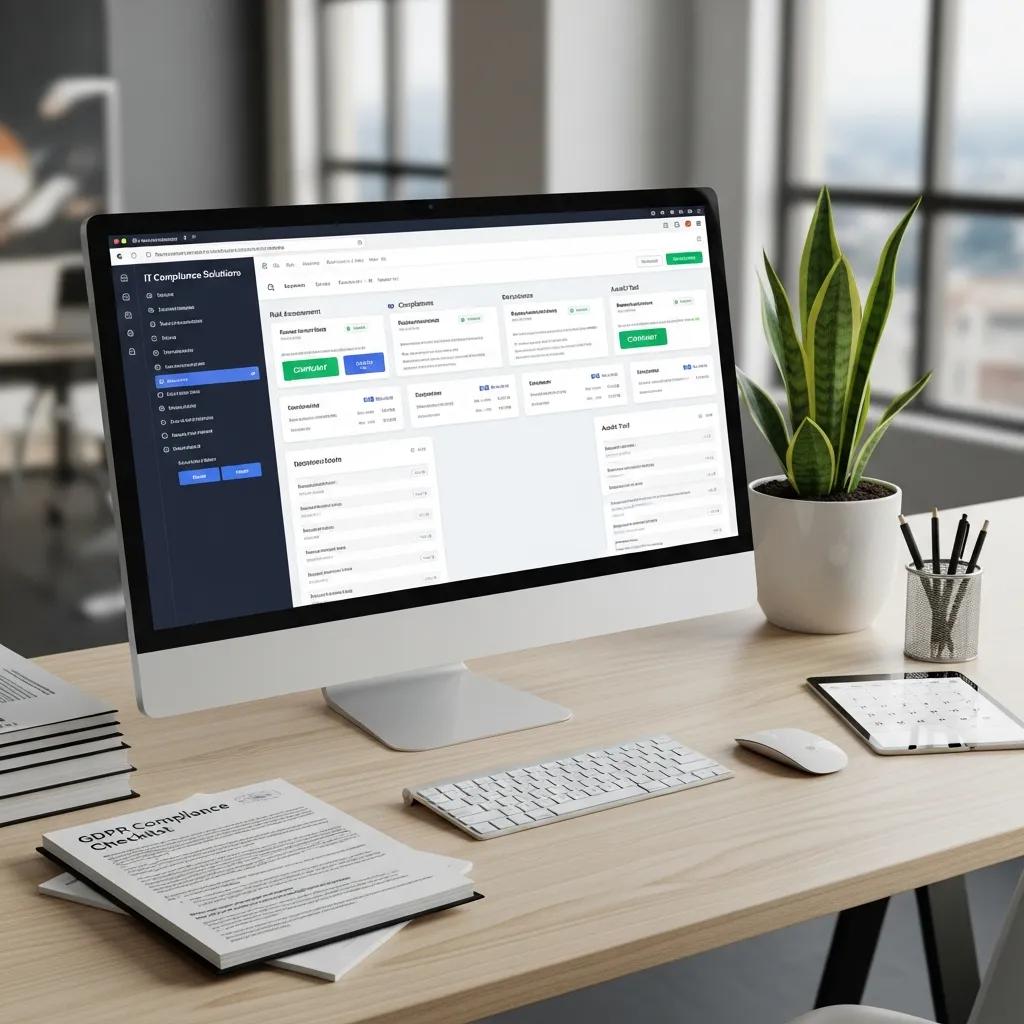
IT compliance solutions give businesses practical tools to meet regulatory requirements. They automate routine tasks, centralise evidence and make it easier to demonstrate compliance to auditors. That reduces manual work and helps ensure controls stay active as the business changes.
What role do managed IT services play in compliance management?
Managed IT services support compliance by providing continuous monitoring, patching and expert guidance. Service providers can run regular security checks, apply updates, and document actions — all of which simplify audit preparation. Their proactive approach helps small teams stay on top of vulnerabilities and be ready for regulator or customer audits.
How can cloud compliance management reduce regulatory risks?
Cloud platforms can help SMEs manage compliance by centralising data, automating compliance checks and offering built-in security controls. Real-time monitoring flags deviations quickly, and many cloud vendors provide features designed to support regulatory requirements. That said, cloud adoption also brings challenges: SMEs must understand shared responsibilities and ensure configurations meet relevant frameworks.
Recent research shows these challenges are significant — many SMEs struggle to meet information security requirements in cloud environments without additional governance and tooling.
Information Security Compliance for Cloud-Based SMEs
Cloud computing brings clear benefits — cost savings, scalability and flexibility — but it also adds regulatory and security complexity for Small and Medium-Sized Enterprises. Unlike larger organisations with dedicated compliance teams, many SMEs lack the budget and specialist skills to build full security frameworks. Standards such as ISO 27001, SOC 2, NIST 800-171 and PCI DSS can be hard to implement, and failure to comply can lead to heavy fines, reputational harm and operational disruption.
Analyzing the Effectiveness of Information Security Compliance on Cloud Based Small and Medium Enterprises (SMEs), 2025
For some organisations, those hurdles have even prompted a rethink of cloud strategies — underscoring the importance of structured compliance management.
Cloud-Based Business Process Compliance Management Systems
Even with cloud benefits, some businesses step back from cloud services because they can’t fully meet regulatory and security demands. Compliance needs to cover both domain-specific rules and general security controls. This paper proposes a business process compliance management system that verifies business processes against requirements at design and runtime, helping organisations avoid penalties for partial or incomplete compliance.
An improved cloud-based business process compliance management system using a user-centered approach, AM Mustapha, 2024
What Are Best Practices for Cybersecurity Compliance in Businesses?
Adopting cybersecurity best practices helps businesses meet regulatory obligations and reduce risk. Practical, repeatable approaches make compliance more manageable and strengthen everyday security.
How to implement effective risk management for compliance?
Use a simple, repeatable process:
- Assess Current Security Measures: Regularly review systems, controls and processes to find vulnerabilities.
- Prioritise Compliance Gaps: Focus on the gaps that pose the greatest legal or business risk.
- Develop a Roadmap: Set clear steps, owners and timelines to close gaps and track progress.
Following these steps builds a risk-aware approach that supports both security and regulatory goals.
Which compliance frameworks guide cybersecurity standards?
Several frameworks provide structured guidance for cybersecurity. In Australia, the Essential Eight is practical and widely used. Internationally, the NIST Cybersecurity Framework and ISO/IEC 27001 offer comprehensive roadmaps for managing cyber risk. Choosing the right framework depends on industry, regulatory obligations and the organisation’s maturity.
How Can Businesses Monitor and Audit Compliance Effectively?
Monitoring and auditing keep compliance current. Regular reviews, automated checks and organised evidence make audits smoother and help spot problems early.
What tools help with compliance audit and monitoring?
Common tools that support audits and ongoing monitoring include:
- Compliance Management Software: Centralises requirements, tasks and evidence so deadlines and obligations are visible.
- Security Control Implementation Tools: Enforce policies and technical controls consistently across systems.
- Audit Preparation Tools: Collect and organise documentation to speed up audit cycles.
These tools reduce manual work and give teams confidence that controls are functioning as intended.
How to use compliance checklists to ensure ongoing adherence?
Checklists are a practical way to keep compliance on track. A basic process looks like this:
- Conduct Thorough Audits: Use checklists to verify controls and collect evidence on a regular cadence.
- Prioritise Compliance Gaps: Triage findings by risk and impact, then focus remediation where it matters most.
- Develop a Roadmap: Turn checklist results into a plan with deadlines and accountable owners.
Consistent checklist use helps businesses stay audit-ready and close issues before they escalate.
| Compliance Tool | Feature | Application |
|---|---|---|
| Compliance Management Software | Tracks requirements | Ensures deadlines are met |
| Security Control Implementation Tools | Enforces policies | Protects sensitive data |
| Audit Preparation Tools | Organizes documentation | Streamlines audit processes |
For practical guidance on improving your compliance posture, visit Austin Technology.
Frequently Asked Questions
What are the consequences of non-compliance for SMEs?
Non-compliance can be costly. Fines may range from thousands to millions depending on the law involved. Beyond financial penalties, businesses can suffer reputational damage, loss of customer trust and disruptions to operations. In severe cases, legal action or closer regulatory oversight can follow. Treating compliance as part of business continuity helps avoid these outcomes.
How can SMEs stay updated on compliance regulations?
Keep informed through a mix of sources: subscribe to industry newsletters, join relevant associations, and attend webinars or workshops. Compliance management software can also alert you to regulation changes. For complex issues, consult a legal or compliance professional who understands your sector.
What role does employee training play in compliance management?
Training is essential. Regular, role-specific sessions ensure staff understand policies, data-handling rules and how to spot risks. A culture of compliance — where people know how to report issues and follow procedures — reduces mistakes and strengthens overall security.
How can technology enhance compliance management for SMEs?
Technology automates routine tasks, centralises records and provides real-time monitoring. Compliance software simplifies documentation, tracks regulatory changes and supports audits. Analytics can surface risk trends so you can act before problems escalate. Overall, the right tools make compliance more efficient and reliable.
What are the best practices for conducting compliance audits?
Run audits with a clear plan: define scope, objectives and timelines. Use qualified auditors when possible, gather complete documentation, and document findings with actionable recommendations. After the audit, track remediation and schedule follow-ups to confirm fixes are effective.
How can SMEs balance compliance with business growth?
Integrate compliance into your growth plans. Use scalable solutions that grow with the business, and adopt processes that are repeatable and measurable. Regular risk assessments let you prioritise compliance work without slowing innovation. Framing compliance as an enabler, not a blocker, helps businesses grow responsibly.
Conclusion
Good compliance management protects your business, customers and reputation. By combining sensible processes, appropriate frameworks and the right IT solutions — or trusted managed providers — SMEs can reduce risk and stay audit-ready. For more advice and practical tools to strengthen your compliance program, explore the resources at Austin Technology.